Stop! Put down the vinegar. Here is why the most common advice is often the worst.
Jellyfish stings are a common occurrence along seacoasts, but properly treating them is more complex than many people realize.
When a sting happens, panic often sets in. You might hear people shouting conflicting advice: “Put ice on it!” “Pour vinegar on it!” “Quick, someone pee on it!”
The truth? Most of these popular home remedies can actually make the sting worse. Proper care requires a cool head, a basic medical assessment, and knowing exactly what not to do.
Phase 1: The Assessment (Critical Step)
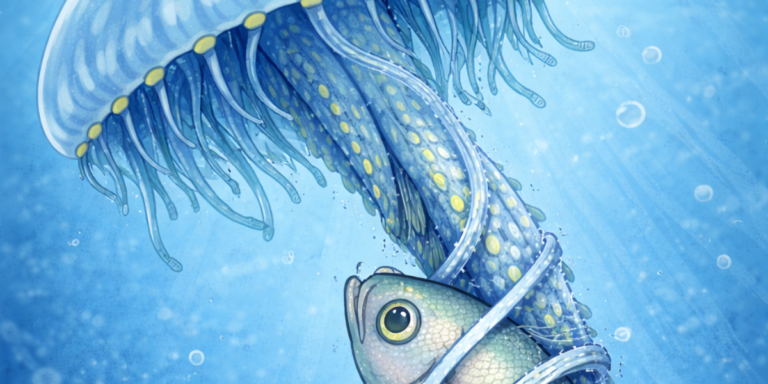
A sting occurs when a swimmer contacts a jellyfish’s tentacles. These tentacles are covered in millions of microscopic stinging cells (nematocysts).
Because lifeguards in the U.S. are generally not trained to identify specific jellyfish species by looking at a sting, you must assess the symptoms first.
1. The Red Flags (Call 911)
Is this a life-threatening emergency? While extremely rare in the United States (dangerous species like the Box Jellyfish are mostly found in Australia and the Indo-Pacific), you must rule out systemic reactions immediately.
Call for emergency help if you see:
-
Shortness of breath or difficulty swallowing
-
Chest pain or heart rhythm disturbances
-
Severe nausea or vomiting
-
Rapid pulse or abnormal blood pressure
2. The Localized Sting (Most Common)
In the vast majority of U.S. incidents, the reaction is “local,” meaning it is restricted to the skin area that was touched. Symptoms include:
-
Intense, burning pain
-
Redness and swelling (welts)
-
A “print” of the tentacle left on the skin (looks like a whip mark)
The Reality: This is painful, but not life-threatening. Proceed to the treatment steps below.
Phase 2: The Myths (What NOT To Do)
Before you open your beach bag, you need to unlearn the “common knowledge” about jellyfish stings.
Do NOT use these methods:
Vinegar: For most U.S. species (like the Sea Nettle), vinegar can cause unfired stinging cells to discharge, releasing more venom.
Urine: This is an urban legend. It does not neutralize venom and can cause infection.
Scraping (Credit Card/Sand): Rubbing the area presses the stinging cells deeper into the skin.
DID YOU KNOW? Pouring vinegar on an Atlantic Sea Nettle sting is like trying to put out a fire with gasoline. It activates the stinging mechanisms that haven’t fired yet, doubling the amount of venom entering your body.
Phase 3: The Correct Treatment Protocol
Since there are over 300 species of jellyfish, there is no single “magic cure” that works for all of them. However, this protocol is the safest bet for unidentified stings in North America.
Step 1: Calm and Stabilize
Move the person out of the water and into the shade. Stress and anxiety increase blood flow, which can spread venom faster. Keep them calm and hydrated.
Step 2: Remove the Tentacles (Crucial)
Jellyfish tentacles are like loaded guns. Even if they are detached from the jellyfish, they still contain millions of unfired stinging cells.
-
Do NOT touch them with bare hands.
-
Do NOT rub the area with a towel.
-
DO use tweezers, gloves, or a thick cloth to gently pluck the visible tentacles off the skin.
-
DO rinse the area with a large amount of seawater or fresh water to wash away invisible stinging cells without triggering them.
Step 3: Skin Care and Pain Management
Once the tentacles are gone and the stinging cells are washed away:
-
Treat the area like a mild burn.
-
Apply soothing creams to reduce inflammation. If symptoms get worse consult with a medical expert.
-
Take an over-the-counter pain reliever if necessary.
-
Monitor the victim for any delayed allergic reactions.
Important Warning: The “Dead” Jellyfish
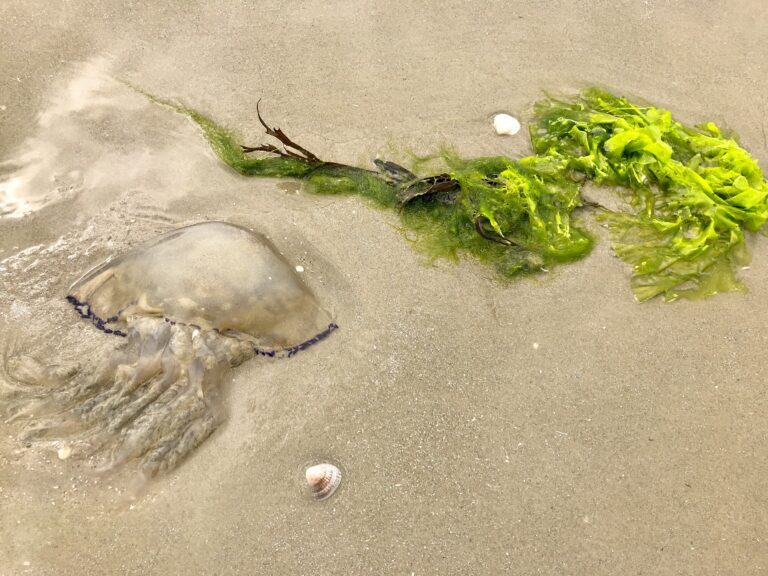
Be careful where you step. Jellyfish that have washed ashore and look like dried blobs of jelly are not safe. Even a dead jellyfish can sting. The stinging cells remain active long after the animal has died. Never let children play with or poke beached jellyfish.
Prevention is Better than Cure
The best way to treat a sting is to never get one.
-
Wear Protective Clothing: Rash guards and stinger suits provide a physical barrier.
-
Use Safe Sea: Our lotion is scientifically proven to deactivate the stinging mechanism of jellyfish, preventing the sting before it happens.